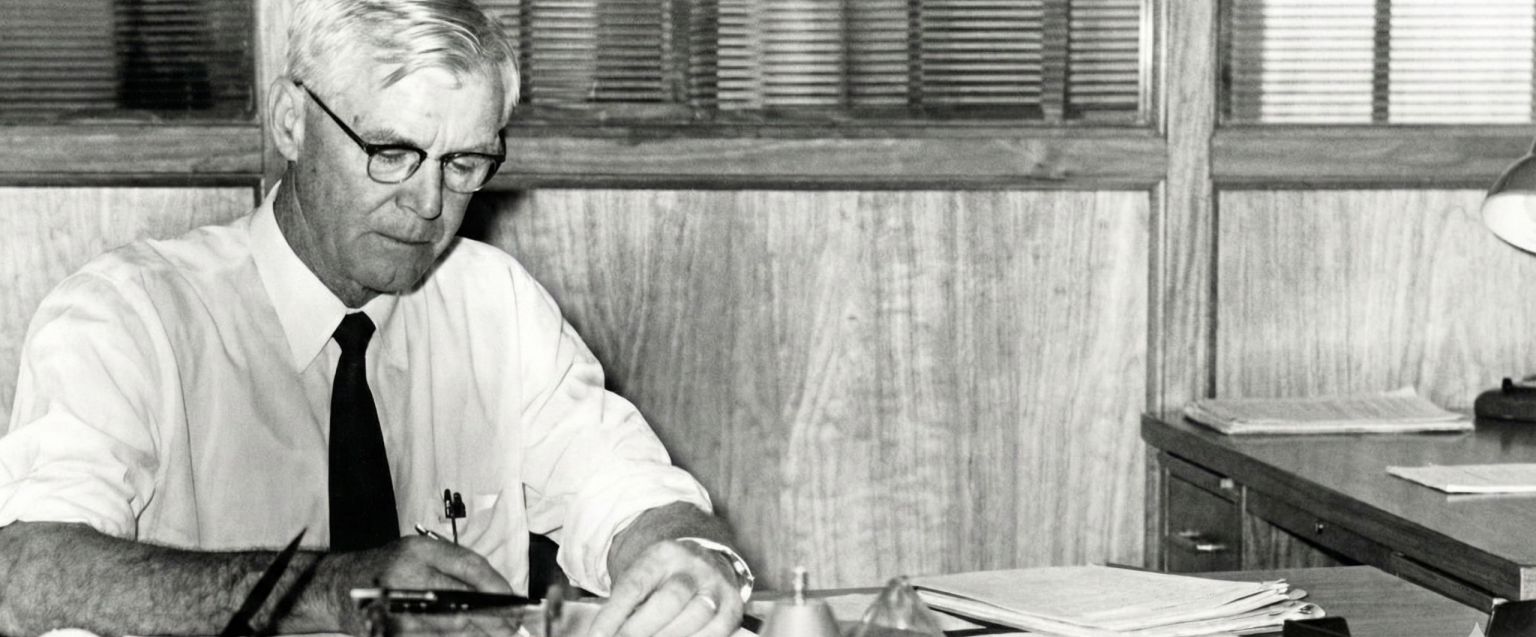
The Life and Legacy of Professor Evan Alan Hardy
Professor Evan Alan Hardy
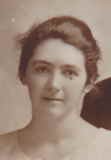
Evan Alan Hardy was born in Milnerville near Sioux City in Iowa on 1 October 1890 to John Loring Hardy and Bertha Simpson. His father was a blacksmith who also managed a farm where young Evan gained early experience working with agricultural tools and machinery. This practical foundation helped him develop into an expert in farm technology.
In 1913 he entered Iowa State College to study Agricultural Engineering and graduated in 1917. He married Lois Abbie Hicks who was born in Gaza in Iowa in 1893. They had three daughters named Helen Grace, Margaret Olive, and Mary Elizabeth. Their son Evan Alan Hardy Jr. died shortly after birth. Mrs. Hardy passed away in 1983 in Festus in Missouri.
Professional Journey and Contributions
With his degree completed, Professor Hardy joined the University of Saskatchewan in Canada where he became a pioneering figure in agricultural engineering. He introduced new technologies that supported the shift from horse drawn implements to tractor based farming. Some of the equipment from this era is still preserved at the Hardy Institute in Ampara.
In 1922 he completed a Master’s Degree in Mechanical Engineering. By 1926 he was appointed Head of the Agricultural Engineering Department at the University of Saskatchewan. His innovations were adopted widely by manufacturers and one of his most notable creations was the Serrated Rome Plough, often called the Hardy Plough.
During the Gal Oya Development Project a shortage of skilled technical officers became a major obstacle. Heavy machinery was used by contractors working on the Inginiyagala dam and Senanayake Samudra reservoir. Professor Hardy played a key role in training locals to operate and maintain this equipment under guidance from foreign experts.
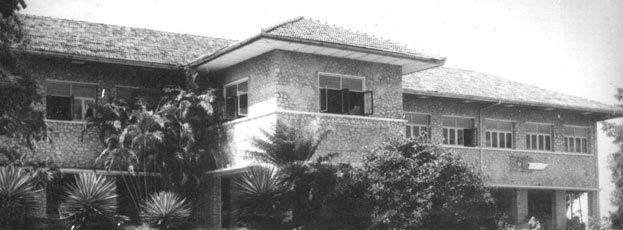
In 1955 construction of buildings at the Institute began. The Regional Technical Training Institute was intended to serve South and Southeast Asian countries. Professor Hardy planned every detail from academic programs to equipment and accommodation. His kind and supportive nature is remembered fondly by early students and staff.
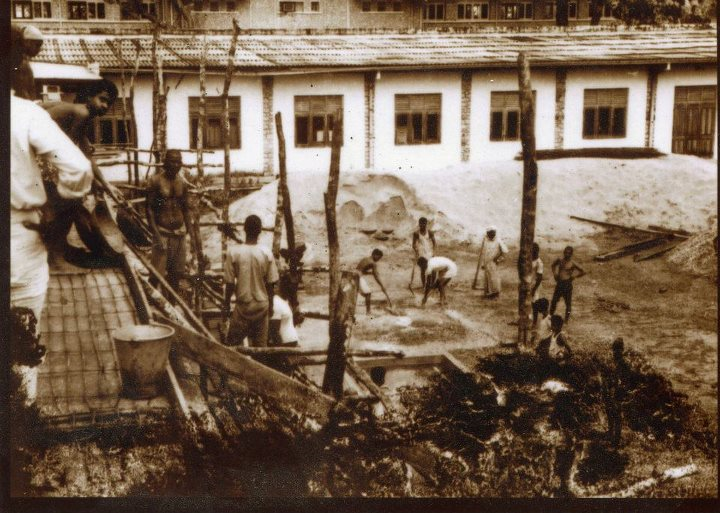
The Institute included laboratories, workshops, hostels, lecture halls, an auditorium, and a demonstration farm. Students came from Burma, Malaysia, North Borneo, the Philippines, Thailand, Vietnam, and Singapore, as well as from across Sri Lanka.
A Leader Loved by All
Students describe the campus as a lively and well maintained environment with excellent accommodation and food. Professor Hardy was admired as a fatherly figure. He enjoyed visiting sports events and he and Mrs. Hardy welcomed visitors warmly into their home.
In 1967 the Institute came under the Technical Education Unit of the Ministry of Education and was renamed the Hardy Senior Technical Institute. By the 1980s most engineering diploma programs were transferred to the University of Moratuwa except for NDT Agriculture and other trade courses.
Since 1956 the Institute has shaped the lives of thousands of students. Professor Hardy was 63 when he accepted the challenge of establishing the Institute, at a stage in life when many would retire. His dedication is captured in the verse engraved on his monument.
The heights by great men reached and kept were not attained by sudden flight. They, while their companions slept, were toiling upward in the night.
Henry Wadsworth Longfellow
Compiled by Ashoka Jayarathne N. D. T Agriculture 1977 to 1980. Sources include articles by R. Bruce Shepard, D. P. Y. Abewardena, Col. Samarasena, Chandra Nanayakkara, and Experiences in Ceylon by Professor Evan A. Hardy.
Posted By , 09 Dec 2025